Driving in Nairobi: The Complete Visitor’s Guide
Nairobi is a city that rewards the well-prepared traveller. As the undisputed commercial, diplomatic, and cultural capital of East Africa, it buzzes with energy at every hour of the day — and getting around it efficiently is central to having a great experience, whether you are here for business, leisure, or both. For many visitors, the question of how to navigate Nairobi’s roads looms large before arrival. Should you rent a car and drive yourself? Rely on ride-hailing apps? Or invest in a professional driver who knows the city inside out? This complete visitor’s guide to driving in Nairobi covers everything you need to make the right decision — from road rules and traffic patterns to safety, costs, and the smartest way to get around in 2026.
The Basics: Road Rules in Nairobi
Kenya drives on the left-hand side of the road, following the British system inherited from the colonial era. This is the first and most immediate adjustment for visitors arriving from the United States, most of Europe, or other right-hand traffic countries. Steering wheels are on the right side of the vehicle, and overtaking is done on the right. Speed limits are generally 50 km/h within urban areas, 80 km/h on open roads, and 100–110 km/h on highways — though enforcement is inconsistent.
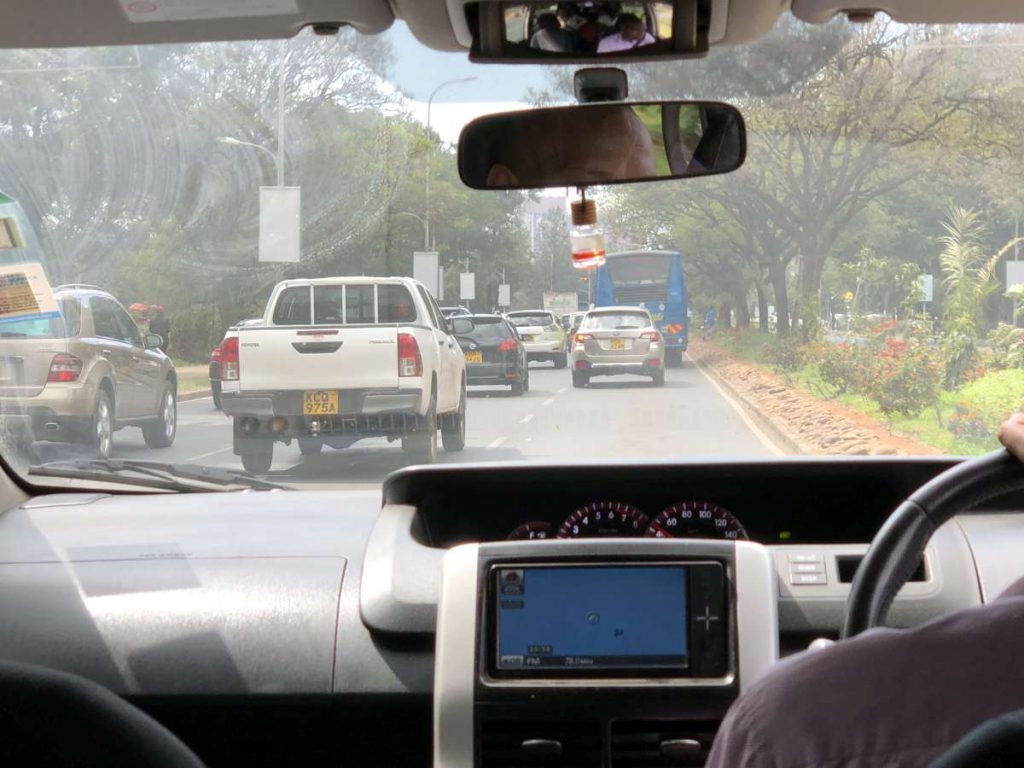
Seatbelts are legally required for all passengers, and using a mobile phone while driving is prohibited. Traffic police are a regular presence on Nairobi’s roads, and roadblocks — particularly on major routes — are common. Having valid identification and relevant vehicle documentation readily available is important. Driving under the influence is illegal and treated seriously.
At intersections, roundabouts are widely used across Nairobi, and the rule is to give way to traffic already on the roundabout. However, as with many rules in Nairobi’s practical driving culture, real-world behaviour at busy junctions often involves more assertiveness and negotiation than formal rules suggest.
Understanding Nairobi’s Traffic: When and Where It Gets Difficult
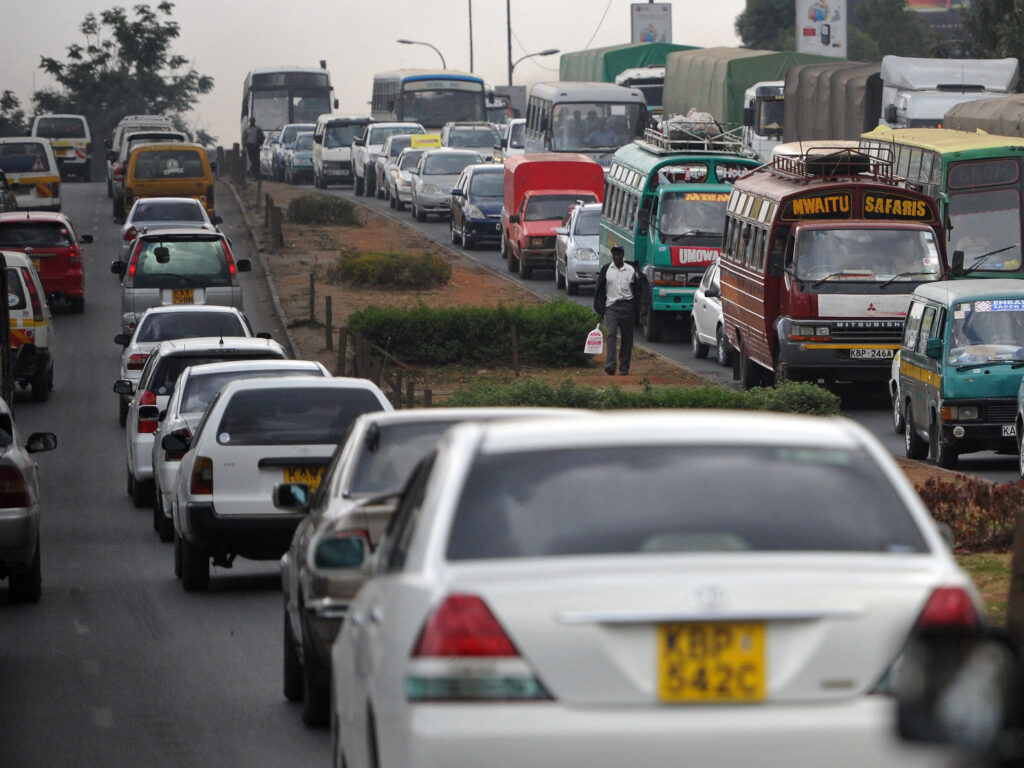
Traffic is the defining challenge of driving in Nairobi, and understanding its patterns is essential for anyone spending time behind the wheel — or planning their day around road travel.
The worst congestion occurs on weekdays between 7am and 9am and again between 5pm and 8pm. The key corridors to watch are:
- Mombasa Road — the main artery connecting JKIA to the city, heavily congested in both directions during peak hours
- Waiyaki Way — the primary route to Westlands, Lavington, and the western suburbs
- Thika Superhighway — links the CBD to Kasarani, Roysambu, and Thika; busy but generally faster than older roads
- Langata Road — serving Karen, Langata, and the southern suburbs
- Jogoo Road and Outer Ring Road — high-volume routes through the eastern parts of the city

Outside peak hours, Nairobi is significantly more manageable. Midday travel between 10am and 3pm is generally the smoothest window for cross-city journeys. Friday afternoons are notoriously unpredictable and should be treated with extra buffer time.
One important reality for visitors using GPS navigation: digital maps in Nairobi are helpful but imperfect. Street naming is inconsistent, many roads are known locally by informal names, and building numbers are rarely used. Landmarks — petrol stations, supermarkets, hotels, and roundabouts — are the currency of Nairobi directions. “After the Shell station, turn left at the junction before Nakumatt” is far more useful than a formal address in many situations.
Matatus, Boda Bodas, and the Unwritten Rules of the Road
No guide to driving in Nairobi is complete without a frank discussion of matatus and boda bodas. Matatus are the colourfully decorated minibuses that form the backbone of Nairobi’s public transport network. They are essential to the city’s functioning — but they are also famous for bold, unpredictable driving behaviour. Sudden lane changes, stopping without warning to pick up or drop off passengers, and aggressive assertiveness at junctions are all part of the matatu experience. As a driver sharing the road with them, anticipation and patience are your best tools.
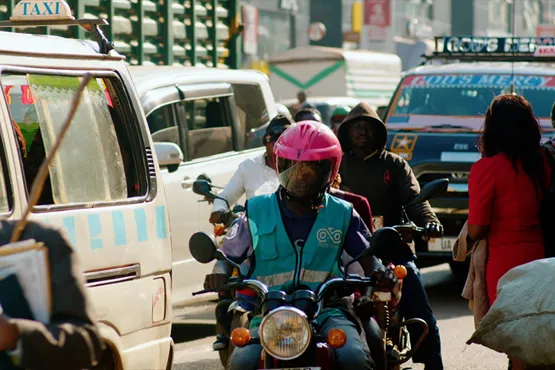
Boda bodas — motorcycle taxis — are equally omnipresent, particularly in residential areas and as the city slows in traffic. They move quickly, weave between lanes, and emerge from unexpected angles. Checking mirrors frequently and leaving generous space around your vehicle is essential.
Pedestrians also behave differently to what many visitors expect. Crossings are not always used, and pedestrians will cross multi-lane roads at unmarked points, often unexpectedly. Staying alert and driving defensively at all times is not optional — it is how experienced Nairobi drivers stay safe.
Parking in Nairobi: What You Need to Know
Parking in central Nairobi and popular business districts is limited and can be expensive. Most commercial areas have designated paid parking lots, and on-street parking in the CBD requires a parking token purchased from county parking attendants in yellow vests. Illegal parking attracts clamping and fines that require a visit to the county offices to resolve — a process that can consume several hours of your day.
In Westlands, Karen, and Gigiri, parking is generally easier, with most malls, hotels, and office parks providing dedicated parking facilities. If you are driving to a meeting or event, it is always worth confirming parking arrangements in advance.
The Smartest Way to Navigate Nairobi: Hire a Professional Driver
After weighing all of the above — the traffic complexity, the local road culture, the parking challenges, and the navigation demands — it becomes clear why a significant and growing number of visitors to Nairobi choose not to drive themselves at all. Hiring a professional driver through Rent A Driver Kenya gives you all the freedom of having private transport, without any of the stress that comes with navigating an unfamiliar city.
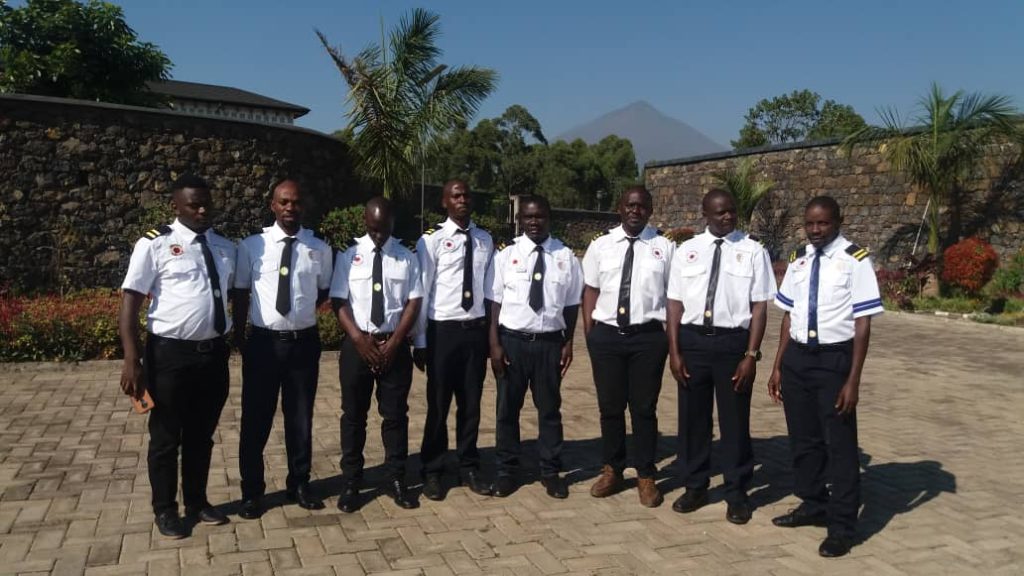
Our drivers know Nairobi’s roads intimately — the fastest routes at different times of day, the areas to avoid, the shortcuts that no GPS will suggest, and the local knowledge that only comes from years of professional experience. While your driver handles the road, you handle your business, your itinerary, or simply sit back and enjoy the city passing by. For airport transfers, corporate travel, city tours, or long-distance journeys across Kenya, Rent A Driver Kenya is your most reliable, professional, and cost-effective transport solution.
Book Your Professional Driver in Nairobi Today
Whether you are arriving in Nairobi next week or planning ahead for a future visit, Rent A Driver Kenya is ready to make your ground transport seamless from start to finish. Get in touch today for a quote or to discuss your specific travel needs.
📧 Email: info@rentadriverkenya.com 📞 Call / WhatsApp: +256-700135510
Rent A Driver Kenya — Expert Local Drivers for Visitors, Executives, and Corporates Across Nairobi.