End of an Era: Africa’s Iconic Super Tusker Dies at 54
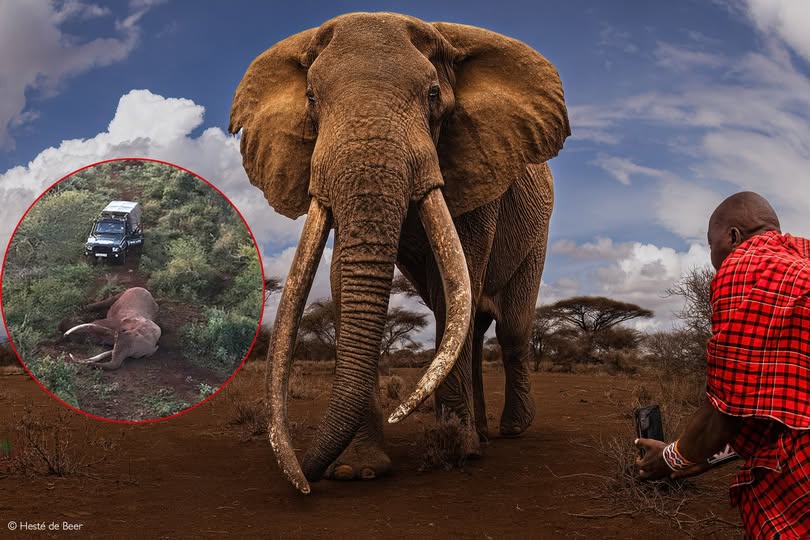
AMBOSELI, KENYA — The golden plains of Amboseli National Park are noticeably quieter this week following the death of one of Africa’s most legendary inhabitants. Craig, a magnificent bull elephant and one of the world’s last remaining “Super Tuskers,” passed away peacefully of natural causes on January 3, 2026. He was 54 years old.
Craig was a living bridge to a bygone era. Born in 1972 to the matriarch Cassandra of the “CB” family, he survived the height of the ivory poaching crisis that decimated Africa’s elephant populations in the 1970s and 80s. While most bulls with his genetic predisposition for large ivory were targeted by poachers long before reaching maturity, Craig lived to become a towering symbol of conservation success.
The Anatomy of a Legend
To be classified as a “Super Tusker,” an elephant must carry ivory that weighs more than 100 pounds (approximately 45 kg) per side. Craig surpassed this comfortably. His tusks were so immense they frequently brushed the earth as he walked, framing his face in a dramatic, sweeping arc of ivory.
Against the iconic backdrop of Mount Kilimanjaro, Craig became the most photographed elephant in the world. Yet, despite his intimidating size and massive tusks, he was renowned for a “gentle giant” temperament. Researchers from the Amboseli Trust for Elephants and rangers from the Big Life Foundation often remarked on his serene nature; he was a docile bull who moved with a slow, dignified grace, showing a remarkable tolerance for the safari vehicles and researchers that followed his journey for over five decades.
A Peaceful Departure
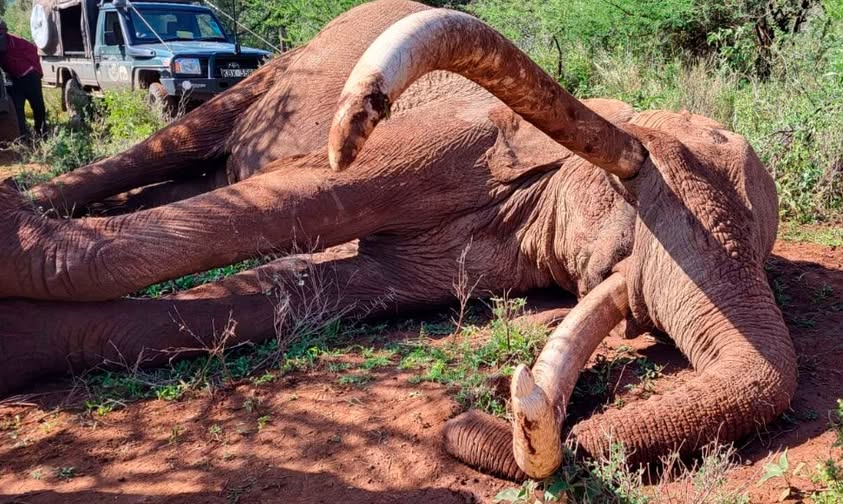
The Kenya Wildlife Service (KWS) confirmed that Craig died on Olgulului community land, a vital corridor surrounding the national park. His passing was not sudden; conservationists had been monitoring his declining health since late 2025.
Like many elderly elephants, Craig’s final challenge was his teeth. Elephants go through six sets of molars in a lifetime, and once the final set wears down, they can no longer chew the tough vegetation required to sustain their massive bodies. Evidence of poorly chewed plant material in his final days suggested he had simply reached the natural end of his biological clock. In his final hours, he was not alone; Big Life Foundation rangers stood a respectful watch nearby as he lay down for the last time at 03:32 AM.
A Legacy in the Dust
Craig’s death is a bittersweet milestone. While his passing marks the loss of a national treasure, the fact that he died of old age rather than a poacher’s bullet is a triumph for Kenyan conservation. His survival was made possible by a unique collaboration between the KWS, NGOs, and the local Maasai communities who shared their land with him.
“Craig was more than just an elephant; he was a testament to what is possible when we commit to protecting a species,” said a spokesperson for the Big Life Foundation. “He survived droughts, habitat loss, and the ivory trade to die naturally on the soil where he was born.”
Craig leaves behind a significant biological legacy. Having reached full maturity, he is believed to have fathered dozens of calves, passing on the rare “super tusker” genes to a new generation. However, his death highlights the fragility of his kind; with Craig gone, it is estimated that only about nine Super Tuskers remain in the Amboseli ecosystem, and fewer than 30 in all of Africa.
As the sun sets over Kilimanjaro, the image of Craig’s massive silhouette moving across the horizon will be missed by many, but his story remains a powerful beacon of hope for the future of the African elephant.
Planning to visit Kenya for a safari to Amboselli national park – simply contact us now by sending an email to info@rentadriverkenya.com or call us now on +256-700135510 to speak or chat with reservations team.