Kenya Road Trip for Photographers: Best Vehicles
#image_title
For wildlife photographers, the vehicle you shoot from is just as important as the camera in your hands. Kenya’s parks offer some of the most rewarding wildlife photography on the planet, but nearly all of it happens from inside a vehicle — which means your choice of car directly affects your angles, stability, and ultimately, the quality of your images. Here’s an in-depth guide to picking the right vehicle for a photography-focused road trip through Kenya.
Why Vehicle Choice Is a Photography Decision, Not Just a Travel One
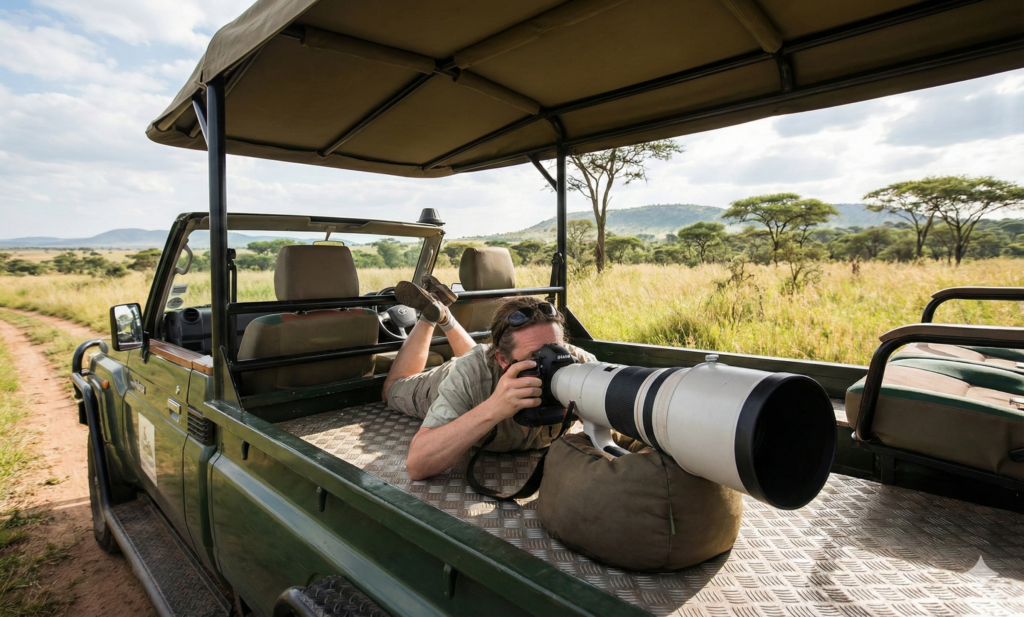
Unlike a typical safari traveler who’s happy simply to see wildlife, photographers need specific things from their vehicle: stable platforms for heavy telephoto lenses, unobstructed sightlines, low-angle shooting options, and enough space to move around gear without disturbing other passengers. In East Africa, camera support is almost always vehicle-based rather than tripod-based, which makes the vehicle itself part of your camera-support system, not just your transport.
Best Vehicle Types for Wildlife Photography
Open-Sided 4×4 Land Cruiser
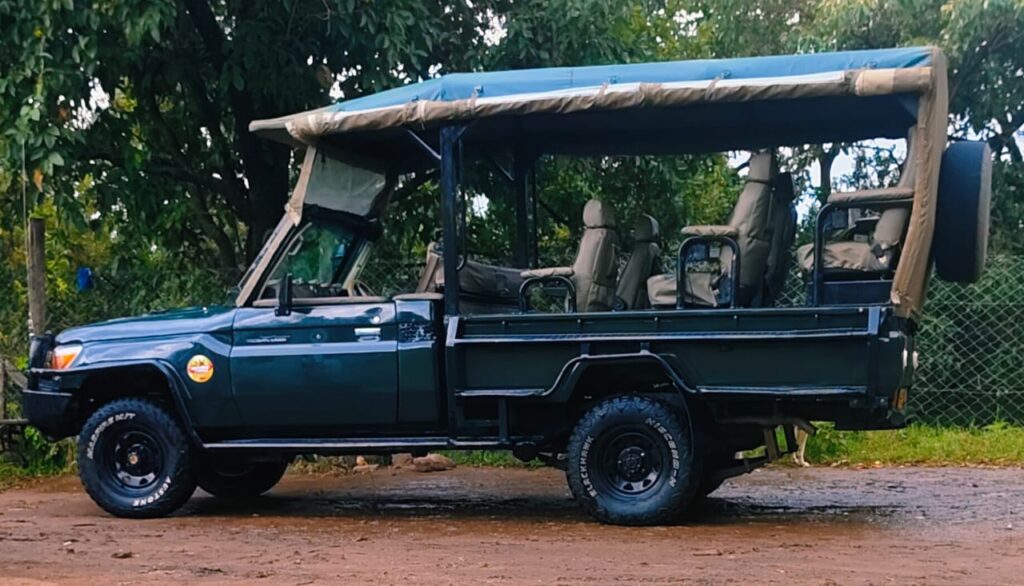
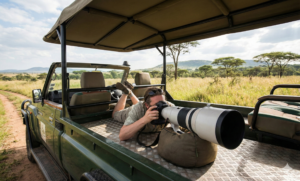
For serious photographers, the open-sided safari Land Cruiser is considered the top choice. Designed specifically for exclusive wildlife photography experiences, these vehicles feature fully open viewing areas that eliminate the window frames and roof edges that can interfere with compositions in standard vehicles. Many come with tiered seating so each row has a clear, unobstructed view, along with built-in bean bag supports, canvas rain covers, and dust-proof compartments for gear. This configuration is especially valuable in private conservancies, where off-road driving is permitted and getting close to wildlife at unusual angles is part of the appeal.
Closed-Sided 4×4 Land Cruiser with Pop-Up Roof
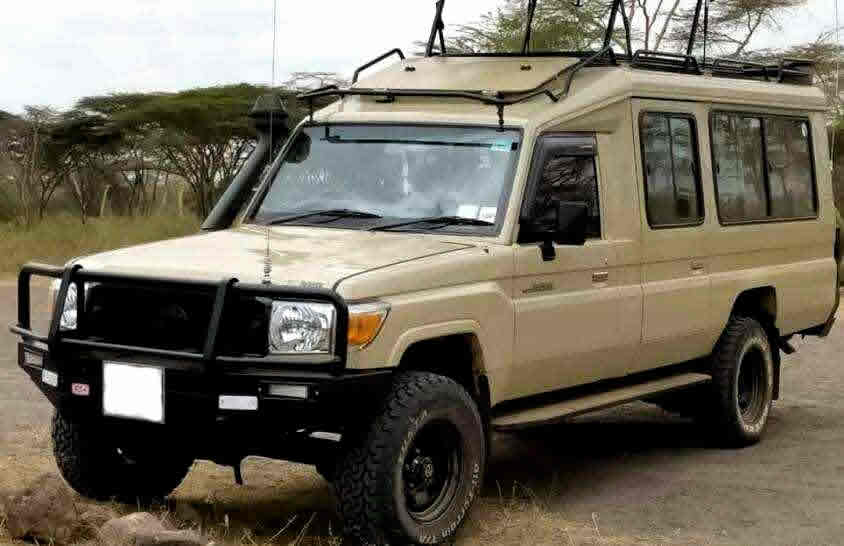
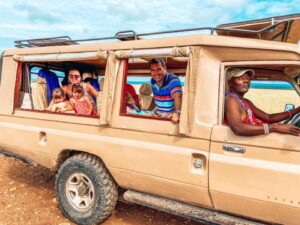
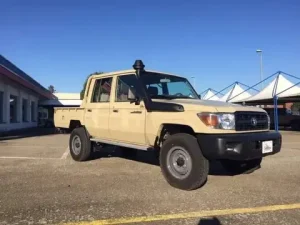
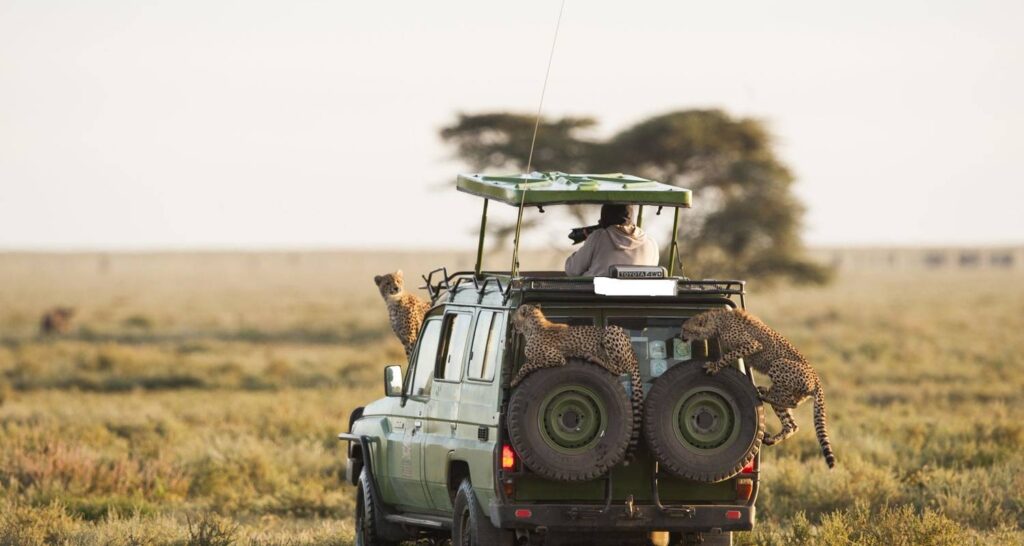
The standard closed-sided safari Land Cruiser with a pop-up roof remains the most widely available and practical option for photographers touring Kenya’s national parks and reserves (where off-road driving and open-sided vehicles are often restricted). The roof hatch gives you a stable, elevated shooting position with a wide field of view in every direction — considered the least restrictive option for handheld or beanbag-supported shooting, since you can rotate 360 degrees without being boxed in by a window frame.
4×4 Safari Van
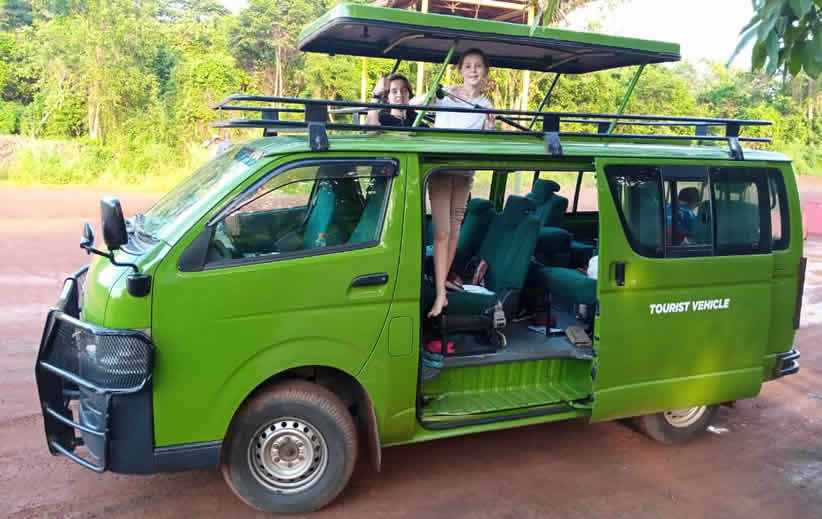
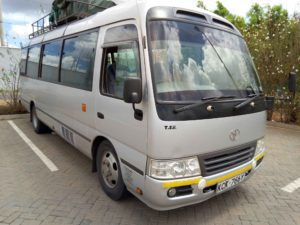
A more budget-conscious option, the safari van typically accommodates six to eight passengers and includes a pop-up viewing roof and large sliding windows that provide solid visibility and photography conditions. While it lacks the open-air feel of a dedicated photography vehicle, it remains a workable choice for photographers traveling on tighter budgets or joining a small group tour, particularly for wide-angle or landscape-style photography where extreme telephoto stability matters less.
What to Look For as a Photographer
A Pop-Up or Open Roof Hatch
This is the single most valuable feature for a wildlife photographer. Shooting from a roof hatch lets you stand, rotate, and shoot in any direction without the vehicle needing to reposition — something that matters enormously when wildlife moves unpredictably and you don’t have time to ask your driver to circle around.
Large, Fully Opening Windows
When you’re not shooting from the roof, large sliding windows become your low-angle option — often described by photographers as an “eye-to-eye” secret weapon for getting more intimate, ground-level perspectives than a standing shot from the roof can offer.
Beanbag Support (Built-In or Provided)
Because almost all safari photography in East Africa happens from inside a vehicle, beanbags — not tripods — are the standard method of camera support, since tripods take up too much space and are impractical with other passengers moving around inside the vehicle. Many dedicated photography vehicles now include bean bag supports as a standard feature; if yours doesn’t, plan to bring your own or request one from your operator in advance.
Space to Move and Store Gear
Photographers typically travel with more equipment than the average traveler — multiple lenses, extra bodies, chargers, and protective cases. A vehicle with dedicated storage compartments and enough room to access gear without disturbing other passengers is a major advantage, especially on multi-day trips where you’re constantly swapping lenses for different subjects and lighting conditions.
Fewer Passengers Per Vehicle
Photography-focused trips generally work best with fewer people per vehicle than a standard safari van or tour bus. A dedicated photography vehicle carrying just four to six guests allows each person their own shooting space and roof or window position — critical when a rare sighting like a leopard or cheetah hunt demands quick, unobstructed access rather than jostling for position.
Reliable Charging and Power
Longer photography-focused itineraries mean more battery drain from continuous shooting, especially with modern mirrorless bodies. Vehicles equipped with charging ports and power access reduce the risk of missing a shot because of a dead battery mid-drive.
Private Conservancies vs. National Parks: A Photography Consideration
Where you’re shooting matters as much as what you’re shooting from. Kenya’s national parks and reserves generally restrict vehicles to designated roads and prohibit open-sided vehicles for safety and conservation reasons. Private conservancies bordering parks like the Maasai Mara, by contrast, often permit off-road driving and open-sided vehicles, giving photographers far greater flexibility to position for the ideal angle, light, and background. If photography is the primary goal of your trip, building conservancy time into your itinerary — alongside a vehicle rated for off-road use — can significantly expand your creative options.
Practical Tips for a Photography Road Trip
- Book a smaller group size: Fewer photographers per vehicle means less competition for the roof hatch and prime window positions during key sightings.
- Confirm beanbag availability in advance: Don’t assume they’re included — always confirm with your operator or driver before your first game drive.
- Ask about off-road access: If shooting in a conservancy, confirm the vehicle and permit both allow off-road positioning for photography.
- Consider a window/gimbal mount for heavy lenses: For large telephoto lenses (400mm and above), a clamp-style window mount paired with a gimbal head can offer more stability than a beanbag alone during long tracking shots.
- Prioritize a knowledgeable driver-guide: A guide experienced with photographers will anticipate animal movement and position the vehicle for light and background — arguably as valuable as the vehicle itself.
- Pack a beanbag as backup: Even when one is provided, carrying a compact, collapsible beanbag of your own ensures you’re never caught without support if plans change mid-trip.
Final Thoughts
For wildlife photographers road-tripping through Kenya, the ideal vehicle setup pairs a stable, elevated shooting platform — whether an open-sided Land Cruiser in a private conservancy or a pop-up-roof Land Cruiser in a national park — with enough space, support, and flexibility to react quickly when the moment arrives. Choosing the right vehicle, confirming beanbag support in advance, and pairing it with an experienced guide will do more for your final images than almost any piece of camera gear you pack.
Planning to visit Kenya and would love to book a vehicle for wildlife photography- simply contact us now by sending an email to info@rentadriverkenya.com or calling +256-700135510 to speak with reservations team.