Great Wildebeest Migration: When, Where & How to Witness It
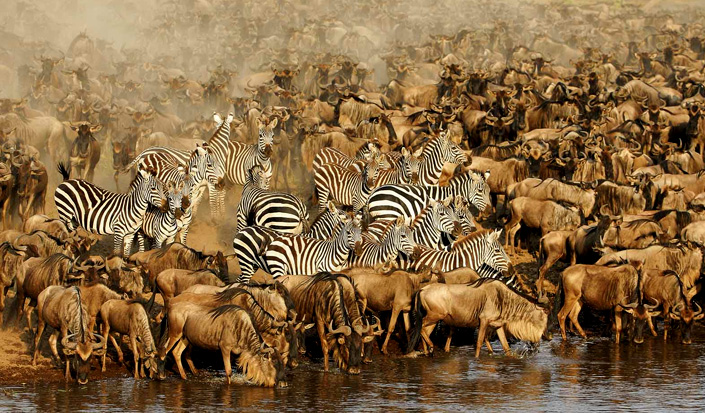
Often hailed as the “Eighth Wonder of the World,” the Great Wildebeest Migration is one of nature’s most spectacular displays of endurance, instinct, and raw survival. This isn’t just a single event; it is a perpetual, clockwise pilgrimage of over 1.5 million wildebeests, accompanied by hundreds of thousands of zebras and gazelles, moving through the vast Serengeti-Mara ecosystem.
Spanning two countries—Tanzania and Kenya—this journey covers roughly 800 kilometers of treacherous terrain. For those seeking to witness this prehistoric rhythm of life, timing and location are everything.
The “Why”: The Quest for Green Pastures
At its core, the migration is a search for food and water. The movement is dictated by the East African rainfall patterns. The wildebeest are “grazing lawn” specialists; they follow the rains to find the highly nutritious short grasses that spring up in the wake of thunderstorms.
Interestingly, the zebras and wildebeests travel together in a symbiotic relationship. Zebras eat the taller, tougher top grass, exposing the shorter, succulent shoots that wildebeests prefer. Furthermore, zebras have excellent memory and navigational skills, while wildebeest possess an uncanny ability to “smell” rain from miles away. Together, they are an unstoppable force of nature.
The “When and Where”: An Annual Timeline
While the migration is a fluid cycle influenced by changing weather patterns, it generally follows a predictable seasonal calendar.
1. The Calving Season (January – March)
Location: Southern Serengeti and Ngorongoro Conservation Area, Tanzania.
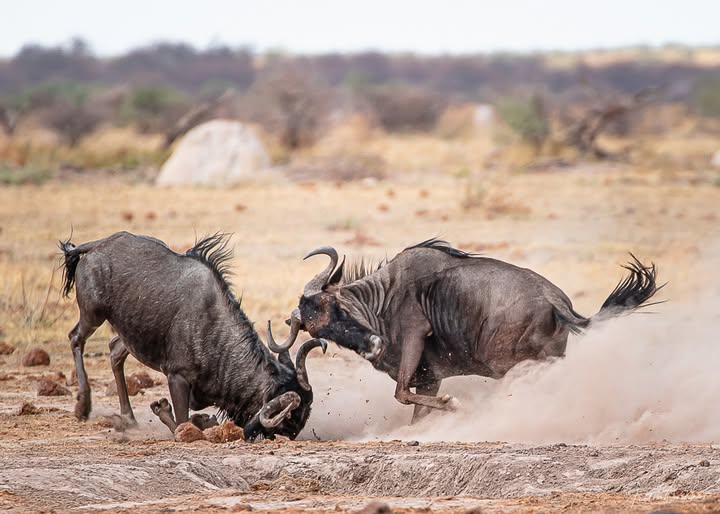
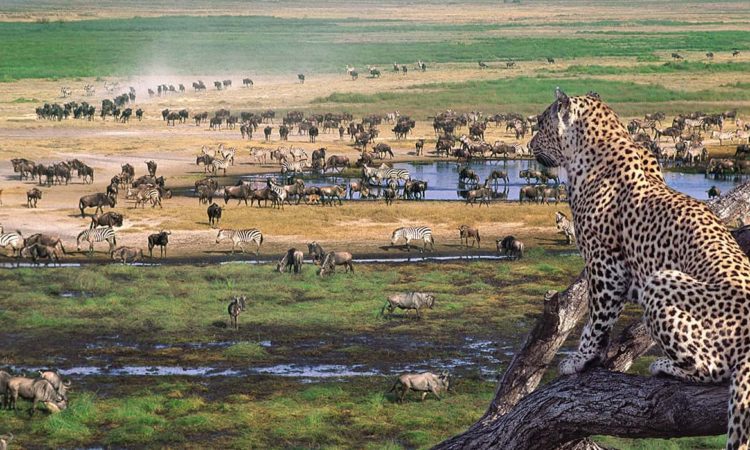
The year begins on the short-grass plains of the south. This is calving season, where approximately 400,000 calves are born within a three-week window. It is a time of plenty, but also of high drama. Predators—lions, cheetahs, and hyenas—lurk in high concentrations, waiting for an easy meal. Watching a newborn calf stand within minutes of birth is a testament to the urgency of life in the wild.
2. The Move North (April – June)
Location: Central and Western Serengeti.
As the southern plains dry out, the herds head north and west. April and May are typically the “long rains” in Tanzania, making the trek muddy and difficult. By June, the herds congregate in the Western Corridor, facing their first major obstacle: the Grumeti River. While not as famous as the Mara River, the Grumeti features massive crocodiles waiting for the herds to cross.
3. The Dramatic River Crossings (July – September)
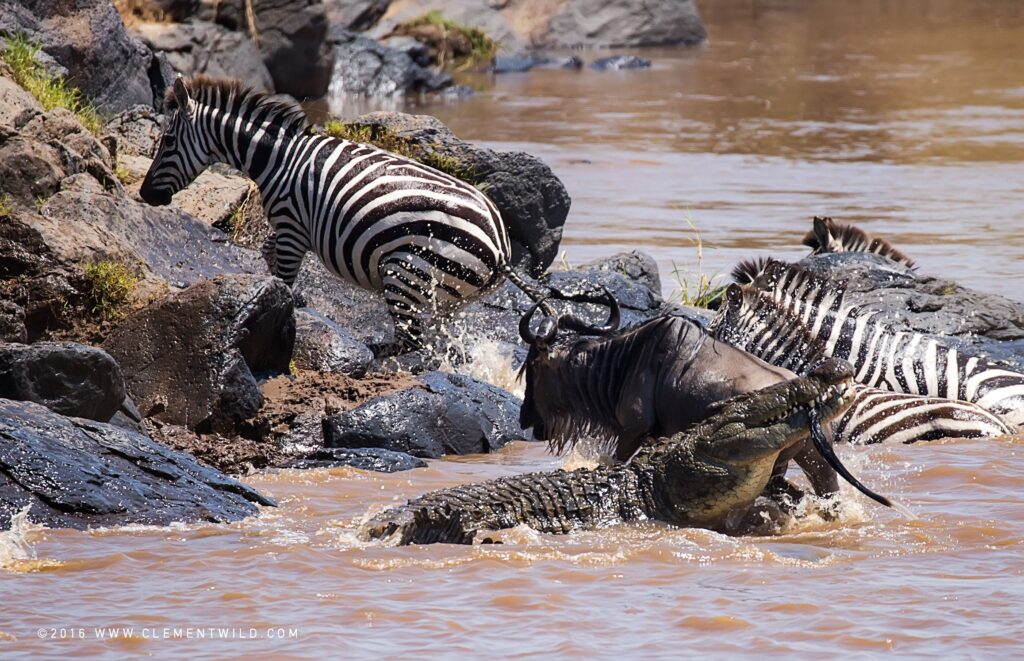
Location: Northern Serengeti (Tanzania) and Maasai Mara (Kenya).
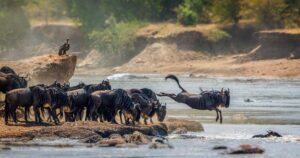
This is the “prime time” for safari-goers. As the dry season takes hold, the herds reach the Mara River. This is the climax of the migration. Thousands of animals gather on the banks, hesitant to enter the water where Nile crocodiles wait. Eventually, a single “leader” leaps in, and the rest follow in a chaotic, dust-filled frenzy.
4. The Return Journey (October – December)
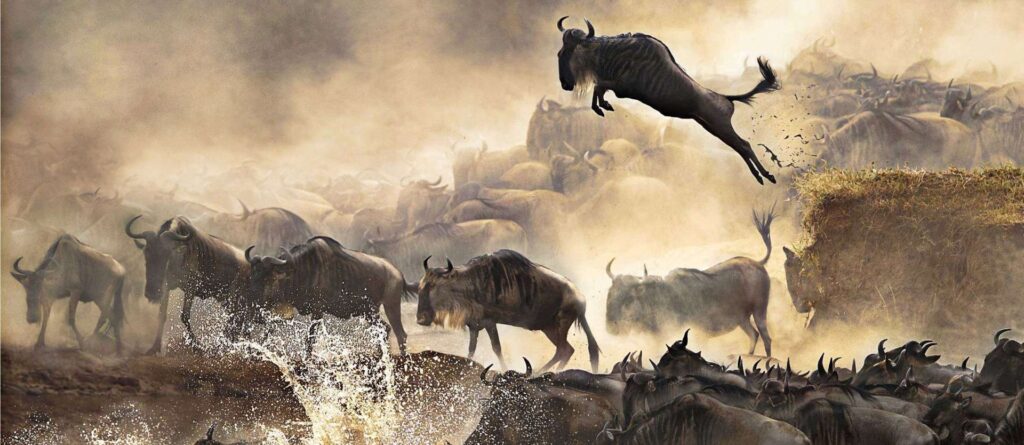
Location: Moving South through the Eastern Serengeti.
Once the short rains begin in the south (usually late October), the herds leave the depleted pastures of the Maasai Mara and head back down through the eastern side of the Serengeti. They move quickly, aiming to reach the southern plains just in time for the cycle to begin anew with the next calving season.
How to Witness the Spectacle: Pro Tips
Seeing the migration is a bucket-list item, but it requires strategic planning.
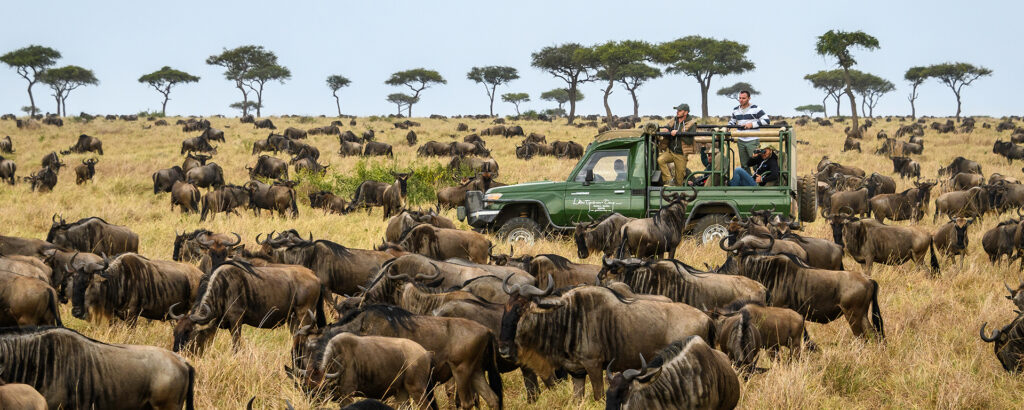
- Book Well in Advance: The best mobile camps (tented camps that move with the herds) often book out a year in advance for the peak months of July to September.
- Choose “Mobile” Over “Permanent”: To ensure you are in the heart of the action, look for semi-permanent mobile camps. These camps shift locations 2–3 times a year to stay within driving distance of the herds.
- Be Patient: River crossings are not scheduled performances. You might sit by a riverbank for six hours watching a herd gather, only for them to decide not to cross that day. Patience is the key to capturing that “National Geographic” moment.
- Respect the Wildlife: The migration is an exhausting ordeal for the animals. Ensure your guide maintains a respectful distance and follows park regulations.
The Reality of Survival
It is important to remember that the Great Migration is as much about death as it is about life. It is estimated that 250,000 wildebeest die during the journey from thirst, hunger, exhaustion, and predation. However, this mortality is vital to the ecosystem; the carcasses provide a massive influx of nutrients into the rivers and soil, supporting vultures, storks, and aquatic life.
A Final Thought: Travel Safely
For many, witnessing the migration involves long drives across the vast reaches of East Africa. Whether you are self-driving in a rental or being chauffeured, road safety is paramount. The roads can be dusty and unpredictable, much like the wildlife.
The Great Wildebeest Migration is a reminder of the Earth’s ancient pulse. It is loud, dusty, beautiful, and brutal. By understanding the rhythm of the rains and the geography of the plains, you can position yourself to witness the greatest show on Earth.
To book a rental car and driver in Kenya for chance to witness the great wildebeest migration in 2026, simply contact us now by emailing to info@rentadriverkenya.com or calling +256-700135510.